Cuttin’ It Up – Ironboards
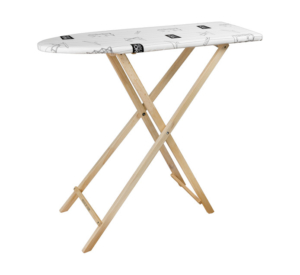
Ironing boards, we all have them, we all use them but what are they other than something that takes up space and most of the time are unattractive – no – just plain ugly. Some people get creative and use Ironing boards for decoration to hang other items to keep your space neat, but it usually gets stuffed in a corner or closet – mine was not exception, it was just used and ugly with scorching, wear and tear from students, myself and time.
One morning I found myself unable to sleep – so at 4am I got up, built a fire in my studio, turned on my music. I sat there trying to focus with a cup of coffee and figure out what I should start working on. Then my eyes focused on my very ugly but necessary ironing board. It had belonged to my mother that I inherited many years ago and didn’t want to get rid of it…so I thought to myself…self – what should I do with it? Spying some left over camo canvas I used to make a jacket with and wondered if there was enough there to make a new cover and YES! There was not only enough to make a new cover but to cover my smaller board to! So I got busy and made both covers, backed them with left over heavy batting and they both turned out even nicer than what I hoped, I love them and discovered this heavy canvas makes a wonderful cover. I was so pleased that I woke my sleepy man up to show him this wonderful thing I created. When he finely got into my studio to see this creation – my ironing board was nowhere to be found…next time I’m going to rethink my use of camo fabric….
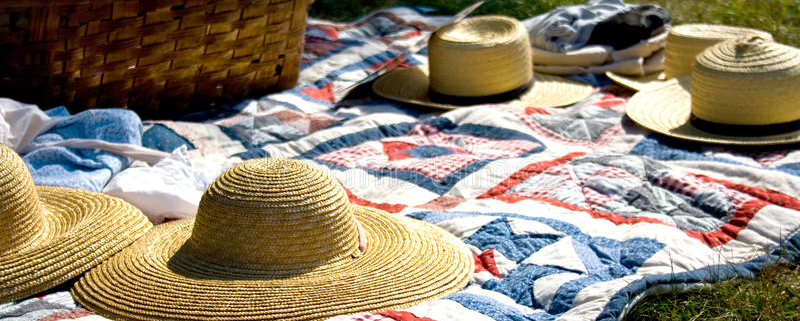
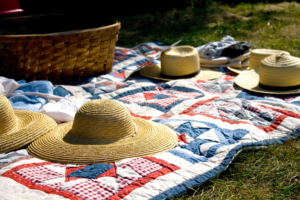 Quilt Guilds have been around for three centuries in the American culture, as formal and informal groups, meeting in churches and homes and barns. Guilds are formed for various reasons and for specific causes from supporting the community to commemorating important people or events. The 19th century Guilds were known as ‘quilting parties or circles’, the 20th century quiltmakers formed groups in order to establish a sense of identity as well for education and mutual support. During the last half of the century fewer mothers and grandmothers have passed on the traditions and techniques of quiltmaking to their children, the 20th century woman have been too busy making a living.